Why I Started This Journal
A little over a week ago, a doctor said a word I could not pronounce, and a word I’m still unable to spell. Cholangiocarcinoma. I can say it out loud now without stumbling, which feels like the smallest possible win. These days, I will take every win I can get.
Here is the honest part. The fear does not sit with me all day. It comes in waves, and it never announces itself first. I can be fine at breakfast and then break down on a drive to the grocery store. I have felt angry at my own body for keeping a secret like this from me. I have felt oddly calm, almost businesslike, sitting in a room while someone explains cancer to me. And I have felt genuinely optimistic. We caught this early. The nodes look clear so far. I have good doctors and family and friends who show up and a whole lot of life I fully intend to keep living. Those are not things I am telling myself to feel better. They are real, and I hold onto them hard. All of these emotions can be true in the same day. If you are somewhere in this too, I want you to know that the whiplash is normal.
The thing I keep coming back to is how much of this is waiting. Waiting on results, waiting on callbacks, waiting on the next appointment to tell me what the last one could not. Waiting on a scheduler to call me back so I can wait for a date that is two or three weeks out.
Nobody warns you that this is the actual work of having cancer. I pictured fighting. What this phase actually looks like is a phone glued to my ear, chasing schedulers and records and referrals, following up on my own follow ups, making the case for myself over and over just to keep things moving. That, and a body that will not explain itself. In the gaps between calls my brain fills the silence with every possible version of the news, and the version it picks at 2am is usually never the good one.
I have started doing what I can with the parts I can control. I keep my own copies of every scan and every report. I write down my questions before appointments so I do not blank in the room. I ask when results are expected, and I call the day after if they have not come. None of that makes the answers arrive faster, but it makes me feel like a participant instead of a passenger.
Then there is the drain. I came home from the hospital with a biliary drain, a tube in my ribs that drains bile into a bag, and nobody hands you a manual for that. Meet Barton, the biliary bag. Something that follows me everywhere and demands this much attention has earned a name. There has been a whole curriculum to learn. How to drain the bag and measure what comes out. How to flush the line so it does not clog, and how to work a clog loose when it does anyway. How to change the dressing around the site, which my husband Ryan has quietly taken over. Bless that man. He does it without flinching and without making me feel like a patient. On top of that there is how to shower. How to sleep without kinking the line or rolling onto it. What to wear so the bag is not obvious in public and where to clip it so it does not pull when I stand up. I have gotten good at pretending he is not there when I am out in public and less good at pretending on the days he leaks or aches. He is uncomfortable and he is inconvenient and he is also the reason my liver is working right now, so Barton and I have reached a mutual understanding.
I am not good at waiting. Twenty years of behavior work and I still cannot outsmart my own nervous system. But I am learning that waiting is not the same as nothing happening, and that on the days I cannot do anything about the cancer, I can still do something about my day.
What is next is straightforward, at least on paper. I am getting in front of people who see this cancer often, because rare means experience matters. The names so far are MD Anderson, UT Austin, and the Texas Liver Institute. Together they give me a team: a cancer center that specializes in this rare diagnosis, doctors close to home, and liver and bile duct specialists who treat exactly this.
There will be more scans and more testing to pin down exactly what type of tumor we are dealing with and which treatment options will work best against it. Then we make a plan and we go.
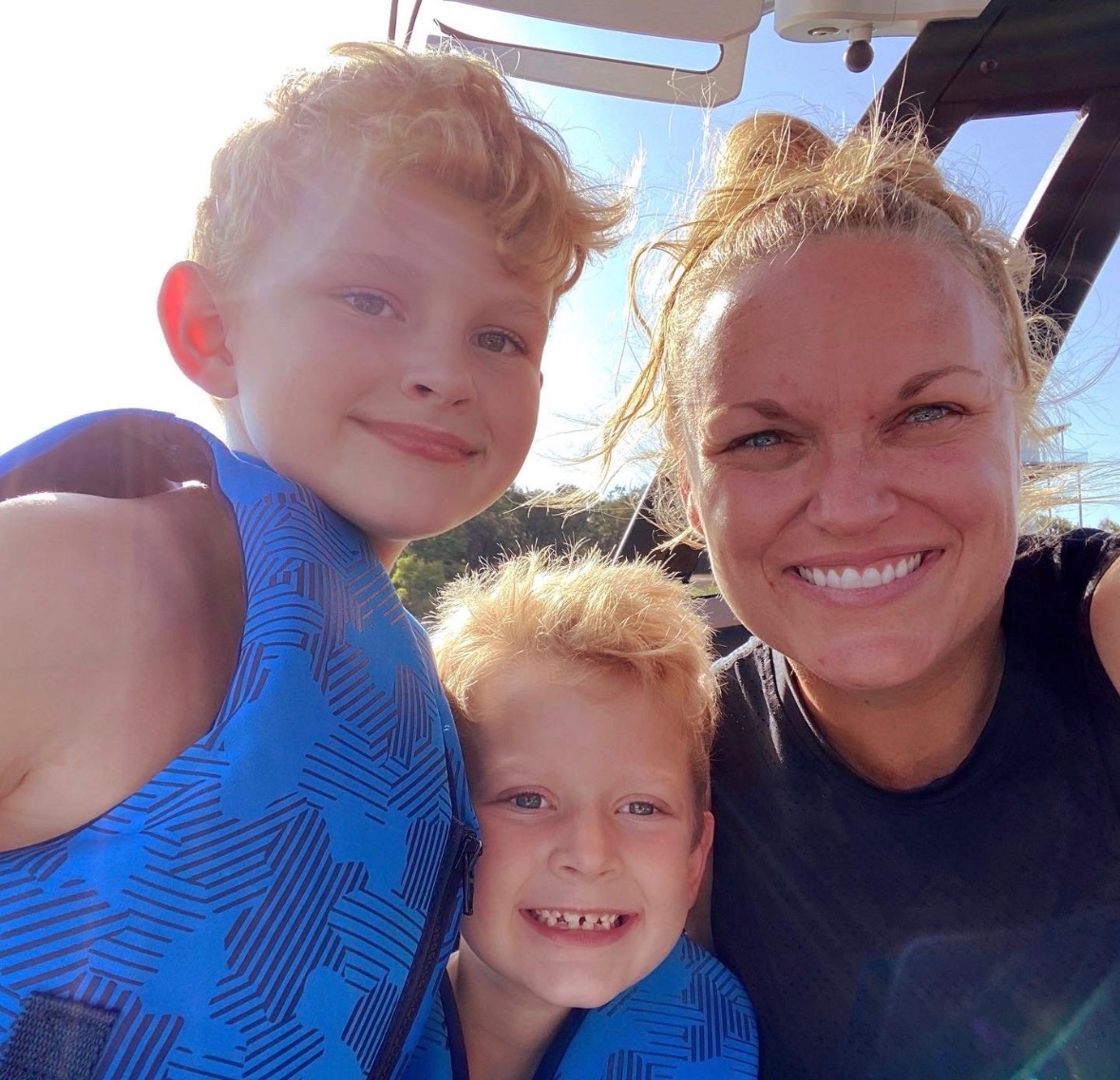 These two are the reason I keep making the calls.
In the meantime, life keeps happening, and honestly that is the best part. There are still practices to drive to, games to cheer through, birthday parties to show up for, and all the ordinary events that fill a family calendar whether or not there is cancer on it. I am holding onto every bit of that.
So this is where I will keep you posted, all of you. If you are family or a friend, you will not have to wonder how I am really doing. If you found this because you just got the same news, welcome. Take a breath. We can do hard things together.
More soon.
Amber